


Views: 0 Author: Site Editor Publish Time: 2026-08-12 Origin: Site


Selecting the wrong hardener inevitably leads to expensive rework, solvent pop, or a complete loss of gloss. When curing failures happen on the shop floor, they drain labor hours and waste expensive materials. You need predictable results to keep production moving smoothly. A hardener, often called an activator, acts as the vital chemical catalyst in your paint system. It cross-links with the clear coat or single-stage resin to build essential durability. This chemical reaction creates a robust barrier providing strong UV resistance and excellent chemical resistance. To achieve a flawless finish every time, you must follow a systematic evaluation framework. We will guide you through choosing the right activator based on ambient conditions, repair scope, and chemical compatibility. Mastering these variables ensures your paint jobs cure correctly, look professional, and stand the test of time.
Temperature is the baseline: Your shop’s ambient temperature and airflow strictly dictate whether a fast, medium, or slow topcoat hardener is required.
Scale dictates speed: Spot repairs require faster flash times to prevent sagging; overall resprays demand slower hardeners to maintain a wet edge and proper leveling.
System fidelity prevents failures: Mixing varying brands or using primer activators in clear coats introduces high risks of die-back and delamination.
Solids content matters: Match the hardener to the specific solids rating (MS, HS, UHS) of your clear coat for accurate film build and compliance.
Making an incorrect chemical choice creates severe bottlenecks in any collision repair facility. A failed clear coat application requires technicians to completely strip the affected panels. They must sand away the ruined layers. They then re-prep, re-mask, and re-shoot the vehicle. This repetitive cycle drastically multiplies your material usage. It also consumes valuable labor hours. Technicians miss deadlines. Customer satisfaction drops significantly. You can prevent these scenarios by integrating the correct Topcoat Hardener into your daily mixing procedures.
A successful activator choice yields highly predictable behavior in the spray booth. You will experience an adequate pot life in the mixing cup. Your applied material will demonstrate appropriate flash-off times between coats. The clear coat will exhibit excellent flow-out, laying down flat and smooth. Furthermore, a properly catalyzed system guarantees long-term gloss retention. It resists shrinkage over the following months. You achieve a mirror-like finish effortlessly.
Painters face immediate consequences when they mismatch activator speeds to the environment. Understanding these specific failure modes helps you diagnose booth issues quickly.
When the hardener is too fast: The paint skins over rapidly. It traps escaping solvents beneath the surface. This trapped gas causes solvent pop, appearing as tiny pinholes. You will also experience severe orange peel and dry spray on the panel edges.
When the hardener is too slow: The liquid remains wet for too long. Gravity takes over. You will battle sagging and running on vertical surfaces. The prolonged wet stage also leaves the panel highly vulnerable to airborne dust and debris contamination.
Isocyanate reactions are strictly temperature-dependent. Heat accelerates the chemical cross-linking process. Cold environments drastically slow it down. You cannot ignore the actual temperature inside your spray booth during application. Measuring the metal temperature of the vehicle is equally important. Airflow also plays a crucial role in solvent evaporation. You must evaluate these environmental dimensions before mixing a single drop of paint.
Paint manufacturers formulate activators to perform within specific temperature windows. You must respect these brackets to achieve proper film leveling. We highly recommend keeping a digital thermometer inside your spraying environment. This removes all guesswork from your daily preparation.
Hardener Speed | Optimal Temperature Range | Primary Application Scenario |
|---|---|---|
Fast Activator | 60°F – 70°F (15°C – 21°C) | Cold weather conditions. Ideal for rapid cross-linking when natural ambient heat is absent. |
Medium / Standard | 70°F – 80°F (21°C – 27°C) | Standard room temperatures. The default choice for climate-controlled spray booths. |
Slow / Extra-Slow | 80°F – 95°F+ (27°C – 35°C+) | Hot weather or high humidity. Prevents rapid surface skinning and allows deep solvents to escape. |
Fast hardeners are strictly for cooler conditions. They force the urethane molecules to link rapidly. Medium hardeners serve as your daily workhorse. They provide balanced flow and flash times in a controlled shop. Slow hardeners become necessary during the peak of summer. They keep the surface open. This extended open time prevents solvent pop in extreme heat. Choosing the right Topcoat Hardener ensures your paint performs beautifully regardless of seasonal weather changes.
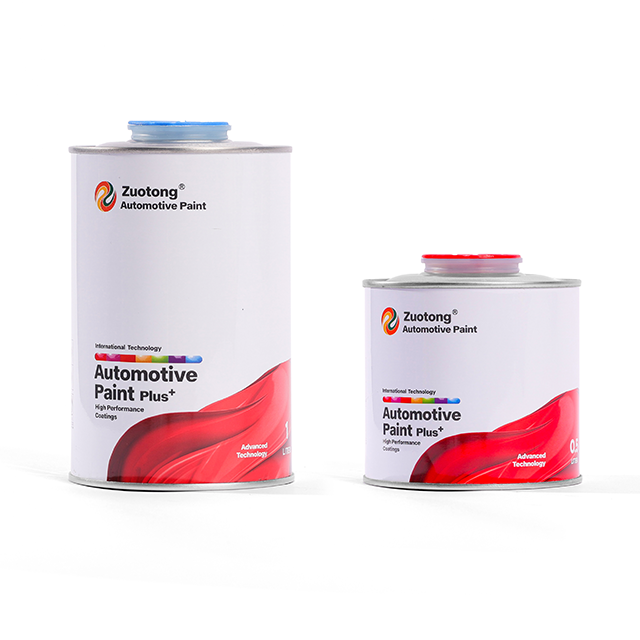
The physical size of your repair job directly alters your required chemical open-time. A painter spraying a single fender operates differently than one painting a large cargo van. You must factor project scale into your activator decision. The goal is to control how long the paint remains workable. This prevents overspray from ruining adjacent panels.
Small repairs require fast-acting activators. You usually paint one or two panels. The applicator needs the paint to tack up quickly. A faster tack time traps less dust. It also allows you to move the vehicle out of the booth sooner. You do not need an extended wet edge for a single bumper cover. Fast cross-linking secures the small footprint efficiently. It maximizes your booth cycle times for minor collision work.
Full-vehicle resprays demand a completely different approach. You must use slow-acting hardeners. This rule applies even in standard booth temperatures. The applicator requires extended time to walk around the entire vehicle. You must maintain a "wet edge" at all times. A wet edge ensures overlapping spray passes melt together seamlessly. If the paint dries too fast, you get dry spray lines on the roof and hood. Slow activators give the clear coat ample time to level out across large surface areas.
Technical specifications dictate how a paint system behaves. You must understand solids content and binder types. Modern clear coats fall into specific regulatory and performance categories. Selecting an incompatible activator destroys the chemical structure. It compromises the final cured film.
Solids refer to the actual resin left behind after the volatile solvents evaporate. Medium Solids (MS) systems use more solvent and less resin. They apply easily but require more coats. High Solids (HS) systems contain more resin. They build thickness rapidly. Ultra High Solids (UHS) systems are extremely dense. They meet strict environmental regulations. HS and UHS clear coats require specific, highly concentrated hardeners. These dense clears must cure properly from the bottom up. Without a dedicated UHS hardener, a UHS clear coat will remain permanently soft. It will easily scratch and lose its protective qualities.
Painters sometimes attempt to save money by cross-branding. They pour a cheap universal activator into a premium clear coat. We call this "Frankenstein" mixing. You must avoid this practice entirely. Off-brand activators lack the precise chemical alignment required by the parent resin. This mismatch voids manufacturer warranties immediately. It also leads to unpredictable UV degradation. The clear coat may peel off in sheets after a few months. Always use the specified Topcoat Hardener designed for your exact paint line to guarantee long-lasting performance.
Even the best materials fail if you mishandle them in the mixing room. Mixing paint requires strict discipline. Chemistry does not forgive estimation. You must monitor your ratios, track your time, and control your air quality.
You must emphasize strict adherence to manufacturer volumetric ratios. Common ratios include 2:1, 3:1, or 4:1. You should use calibrated mixing cups or a digital scale. Never guess the volume. Adding "extra hardener" does not speed up the dry time. Automotive urethanes require a precise stoichiometric reaction. Every resin molecule needs an exact hardener molecule. Excess hardener remains unreacted in the film. It ruins the chemical balance. The final finish becomes extremely brittle and prone to chipping.
Pot life begins the second you introduce the activator to the clear coat. You must define these pot life boundaries clearly. A typical catalyzed mixture lasts one to two hours. Ambient heat drastically accelerates pot life expiration. A mixture might last two hours at 70°F but only 45 minutes at 90°F. If you spray paint that has exceeded its pot life, it will not flow out. It sprays like thick glue and results in massive texture issues.
Isocyanates react aggressively with water. Moisture is the ultimate enemy of paint activators. You face severe risks if you leave hardener tins unsealed. Ambient humidity sneaks into the can. It crystallizes the liquid. You will see cloudy chunks floating in the tin. You must also maintain proper moisture traps in your shop’s compressed air system. Water blowing through your spray gun reacts instantly with the catalyzed paint. It destroys the gloss and structural integrity of the finish.
Always seal activator cans tightly immediately after pouring.
Drain your air compressor tank daily to remove condensation.
Install high-quality desiccant dryers at the booth wall.
Discard any activator that appears cloudy, thick, or crystallized.
You must base your final purchasing and mixing decisions on a strict logical sequence. First, verify the clear coat system requirements to ensure chemical compatibility. Second, measure the exact booth temperature right before spraying. Third, carefully assess the physical size of the repair job. This three-step process guarantees you select the ideal activator speed every single time.
As a next-step action, we highly recommend consulting the Technical Data Sheet (TDS) of your specific paint line before mixing. The TDS provides the absolute truth regarding ratios and temperature brackets. Furthermore, maintain a dedicated stock of fast, medium, and slow activators in your mixing room. Adapting dynamically to changing seasonal conditions will drastically reduce your rework, increase your throughput, and elevate your finish quality.
A: No. Primer hardeners lack the UV inhibitors and specific resins required for clear coats, resulting in rapid chalking, yellowing, and gloss loss.
A: The top layer of the paint will cure too quickly (skinning over), trapping solvents underneath. This inevitably leads to solvent pop (tiny bubbles) and severe orange peel.
A: No. Automotive urethanes require an exact stoichiometric chemical reaction. Excess hardener remains unreacted, causing the paint to become brittle, lose flexibility, and potentially peel.
A: Typically 14 to 30 days if properly sealed. Isocyanates absorb moisture from the air; if the liquid appears cloudy or has formed crystals around the cap, it must be discarded to prevent curing failures.


